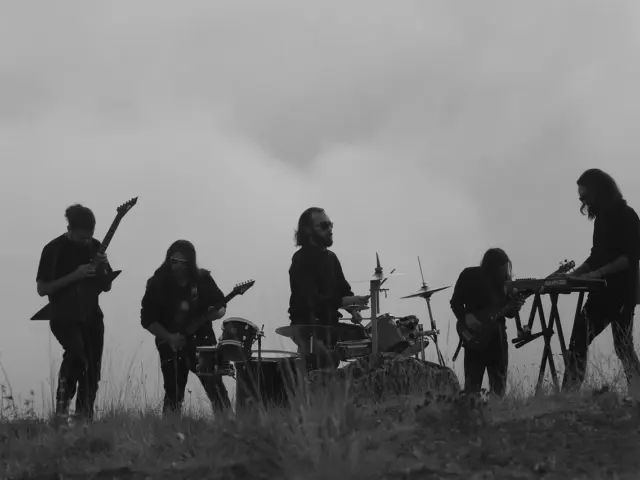

How music royalties work comes down to one idea: every song carries separate rights, and each right is licensed and paid through its own channel. Songwriters and performers usually collect from several sources.
The picture is easiest to follow alongside the basics of what is an indie band, since independent acts often handle several of these roles themselves.
Two copyrights inside every song
The U.S. Copyright Office explains in its guide for songwriters, composers and performers that a song involves two distinct works protected by copyright: a musical work and a sound recording. The musical work is the composition, meaning the notes and any lyrics. The sound recording is the captured audio of one particular performance.
Different people often own each one. A composer or lyricist is a songwriter, while a recording can be created by the performer, a producer or another party. The Copyright Office adds that these works are subject to different rules and are commonly owned and licensed separately, which is why a single stream can trigger more than one payment.
Protection starts early. According to the Copyright Office’s page on what musicians should know about copyright, copyright protection exists from the moment an original work is fixed in a tangible medium, such as an audio file or sheet music. Registering with the Copyright Office is optional, but it adds benefits, including access to federal courts in the case of infringement.
How songwriters get paid
A songwriter’s income mainly comes from the composition. The Copyright Office guide says songwriters can license their musical works themselves or, more commonly, assign the rights in their works to publishers and license their public performance rights to performing rights organizations. The most-often used organizations in the United States are ASCAP, BMI, and the invitation-only SESAC and GMR, according to the same guide.
Performance royalties
Performance royalties are paid when a composition is played in public: on a broadcast, on a streaming service, in a bar or at a venue. BMI describes its role as ensuring that songwriters, composers and publishers get paid when their music is publicly played, as stated on its about page. Because these organizations bundle the rights of many writers into one licence, a venue or station does not have to negotiate with every writer one by one.
Mechanical royalties
Mechanical royalties come from reproducing and distributing a composition, such as in a download or an interactive stream. For digital uses, the Copyright Office says the government has designated the Mechanical Licensing Collective, known as The MLC, as the nonprofit collective that collects and distributes digital mechanical royalties; the details are in the guide for musicians.
The MLC explains on its how it works page that digital services send usage data and royalties each month, the MLC matches those uses to songs that members have registered, and it distributes royalties to members on a monthly basis. A songwriter who never registers songs with the MLC risks leaving money unclaimed.

How performers get paid
A performer’s income mainly follows the sound recording. The Copyright Office guide notes that the recording is commonly licensed by the record label, which promotes the song, monitors its use and collects and distributes royalties. Performers and labels settle the specifics by contract.
The rights are narrower than most listeners assume. The guide states that the public performance right for sound recordings in the United States is limited to digital audio transmissions, and that traditional AM/FM radio stations do not have to get permission or pay royalties to publicly perform sound recordings. Streaming-style services, by contrast, do pay, and the guide explains that when a service uses the statutory licence, royalties go to SoundExchange, which the government designated to collect and distribute them. The source for this is the Copyright Office guide.
That guide also describes a fixed split: copyright owners, often record labels, receive 50 percent of these royalties, featured artists receive 45 percent, and non-featured musicians and vocalists receive 2.5 percent each. The non-featured performers are paid through a separate fund run by two performer unions, and a person does not need to be a union member to be entitled to receive royalties from it.
Where labels, publishers and distributors fit
Middlemen exist because tracking every use of every song is hard. A publisher can register songs with the collecting organizations, monitor use and collect royalties, and the Copyright Office guide says an administration agreement lets a publisher perform administrative duties for a fee while the songwriter keeps the copyright. In a traditional deal, the songwriter assigns the copyright interest to the publisher and receives a share of royalties, while the publisher keeps a share as compensation.
For recordings, independent musicians often use an aggregator or distributor instead of a label. The guide says these services may charge an upfront fee, a recurring fee, or a percentage of your royalty income. Weighing a label deal against going alone is a bigger topic, covered in the comparison of indie label vs major label arrangements.
Sync licences and other income
Putting music in a film, advert or video game needs a separate agreement. The Copyright Office guide says that a licence to the composition is commonly called a synchronization licence, and that there is no synchronization or master use compulsory licence. Those deals are negotiated directly with the rights holders, so the fee is whatever the parties agree.
Royalties are also only part of a working musician’s income. Live fees, direct sales and physical goods sit outside the royalty system entirely; the practical side is covered in band merchandise basics.
Practical steps for independent songwriters and performers
The Copyright Office guide is clear that signing up is the creator’s responsibility. A short checklist follows from it:
- Decide who owns the composition and who owns the recording, and write the split down before release.
- Join a performing rights organization, directly or through a publisher, so public performances are tracked.
- Register songs with The MLC so digital mechanical royalties can be matched and paid.
- Register with SoundExchange as a featured artist or label, or with the performers’ fund as a non-featured player.
- Read any publishing, label or distribution contract carefully before signing.
The guide notes that registering with the MLC does not mean a work has been registered with the Copyright Office, and that these are separate processes. The MLC also states on its how it works page that it does not replace organizations like SoundExchange and the performing rights organizations, so a creator typically deals with several bodies. This page is general information, not legal advice, and a qualified attorney should review any contract.
Frequently asked questions
Do songwriters and performers get paid the same way?
Show answer
No. Songwriters are paid for the composition, mainly through publishers, performing rights organizations and The MLC. Performers are paid for the recording, through labels, distributors and SoundExchange.
Do radio stations pay royalties to performers?
Show answer
According to the Copyright Office guide, traditional AM/FM stations do not have to pay for the sound recording, because the performance right is limited to digital audio transmissions. Songwriters are still paid for the composition.
What is the difference between a mechanical and a performance royalty?
Show answer
A performance royalty is paid when a composition is publicly played. A mechanical royalty is paid when it is reproduced or distributed, such as in a download or an interactive stream.
Does registering with The MLC protect my copyright?
Show answer
No. The Copyright Office guide says registering with the MLC is a different process from registering a work with the Copyright Office.