

How to start an indie band: find a few players who share your taste and commitment, agree on a sound and a rehearsal routine, then finish a small set of original songs you can play live.
The wider picture of what is an indie band in the main guide explains the scene this article assumes, so this page stays practical.
Decide what kind of band you want to be
Before recruiting anyone, write down a short description of the band in plain words. Name a few records that capture the mood, the kind of venues you picture, and how often you honestly want to play. A band that wants weekly shows and a band that wants a quiet recording project need different people, and finding that out after months of rehearsing is a common reason groups fall apart.
Genre matters less than direction. Reading about the history of indie rock shows how much variety has always lived under that label, which is useful when deciding which parts of the tradition to borrow and which to ignore.
It also helps to settle the unglamorous questions early: who owns the gear, who handles messages and money, and what happens if someone has to leave.
Find the right members
Start with people you already trust. Friends, classmates and coworkers who play an instrument are the easiest to reach, and a shared sense of humour counts for more than technical polish. Local music shops, school music departments, community boards and open-mic nights are all places where players meet each other, and a clear message that names your influences and your rehearsal availability draws better replies than a vague request for a band.
A classic lineup is a singer, a guitarist, a bassist and a drummer, but nothing requires it. Keyboards, violins, horns and sampled backing tracks are all common in independent music. What a lineup does need is a rhythm section that locks together and at least one person who can sing or carry a melody. If a member is missing, a stripped-down arrangement often sounds better than a rushed replacement.
Try a first rehearsal as a trial rather than a commitment. Play a cover everyone knows, then a rough idea from a member, and watch how the group listens. Bands usually work when members respond to each other, not when each person plays perfectly alone. Afterwards, talk honestly about whether the room felt easy, whether the schedules fit and whether everyone wants to keep going. A polite no after a trial costs far less than a slow breakup after a debut show.
- Earplugs advice: earplugs
- Copyright on fixation: at creation
- Registration voluntary: voluntary
- Registration needed to sue: required for lawsuit
- Poor man’s copyright: not a substitute
Set up a rehearsal routine
A regular time matters more than a perfect room. Garages, bedrooms and shared rehearsal studios all work, as long as the space is available on a predictable schedule. Bring a simple setlist for each session, record the run-through on a phone, and listen back afterwards, because playing in a loud room hides problems that a recording exposes immediately.
Loud rehearsals are also a health issue. The US National Institute on Deafness and Other Communication Disorders says that long or repeated exposure to sounds at or above 85 dBA can cause hearing loss, and recommends wearing earplugs or other protective devices during loud activities. Music-specific earplugs are designed to lower the volume more evenly, so sound is less muffled than with foam plugs. Anyone with hearing concerns, ringing in the ears included, should see an audiologist or doctor.
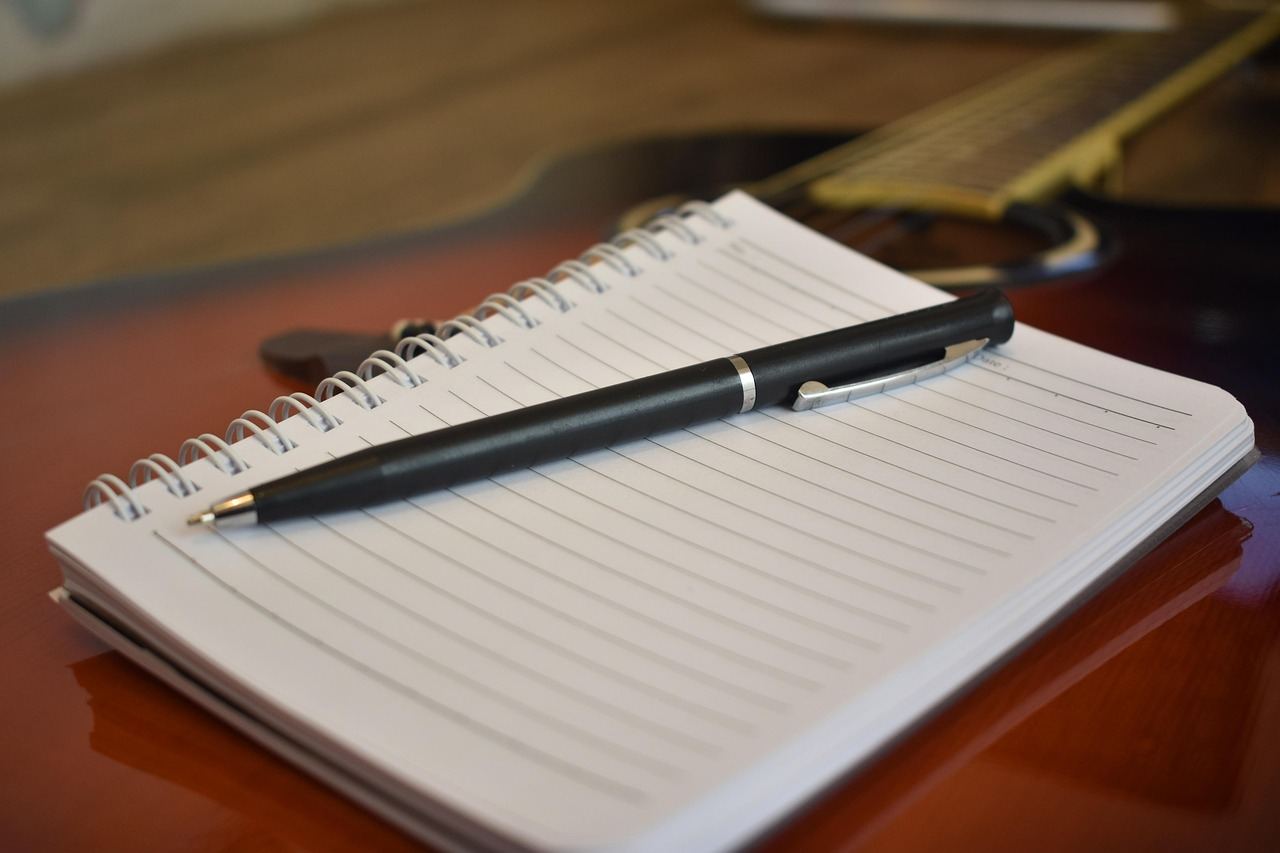
Split each session into a warm-up, work on a couple of songs in depth, and a full run-through at the end. Working on transitions, endings and dynamics is what separates a rehearsed band from a jam session. Keep a shared list of songs in progress, note what needs fixing after each session, and agree who sets the tempo count-ins so nobody wastes time arguing at the start of each song.
Write and finish your first songs
Aim to finish a handful of songs before booking anything. A finished song has a structure, a clear start and end, and a part every member can play the same way each time.
Keep early songs short and simple. A tight set of originals, plus a cover if you want it, is enough for a first live slot, and shorter songs are easier to rehearse into reliability. Record every idea, even rough ones, since a voice memo is often the only record of a melody that took a long time to find.
Copyright is worth understanding from the start. The US Copyright Office explains that a work is under copyright protection the moment it is created and fixed in a tangible form, and that registration is voluntary in general, although it is required before bringing a lawsuit for infringement of a US work. It also notes that mailing a copy to yourself, sometimes called a poor man’s copyright, is not a substitute for registration. This is general information, not legal advice. When several members write a song together, agree in writing how credit and income will be shared before the song earns anything.
Play first shows and share your music
Once a short set feels solid, look for low-pressure slots such as open-mic nights, house shows, small bar nights and shared bills with other new bands. Playing alongside other acts builds an audience faster than headlining alone, and a recording of the set gives you something to send to the next promoter. Bring your own cables, tuners and spare strings, and arrive for soundcheck on time.
Recording can be as simple as a laptop and a pair of microphones, and getting songs online early gives listeners somewhere to find you. When the music is released digitally, songwriters can connect with The Mechanical Licensing Collective, which states that it administers blanket mechanical licenses for eligible streaming and download services in the United States and collects the royalties due under them. Its site describes connecting as free and easy for independent songwriters.
Physical formats can come later, once there is a reason for them. Anyone curious about pressing records can start with vinyl records for beginners, which covers formats and care, but a band does not need a release in any particular format to start playing.
Frequently asked questions
How many members does an indie band need?
Show answer
There is no required size. Solo projects, duos and larger groups are all common, and the right number is whatever lets the songs sound finished and the schedule stay manageable.
Do you need to be a great musician to start a band?
Show answer
No.
Should you write originals or play covers first?
Show answer
Originals are what distinguish an independent band, and a short original set is enough for a first show.
Do you need to register your songs?
Show answer
Copyright exists once a song is fixed in a tangible form, and registration is voluntary in general, though it is needed before a US infringement lawsuit. Rules differ by country and this is not legal advice.