Greek Theatre Los Angeles is the common search for the city-owned outdoor amphitheater in Griffith Park, built from a bequest and used for concerts under open sky in a hillside setting.
It is one of the best-known stops in live music in Los Angeles, and this page explains its setting, its history and the practical rules a visitor should know.
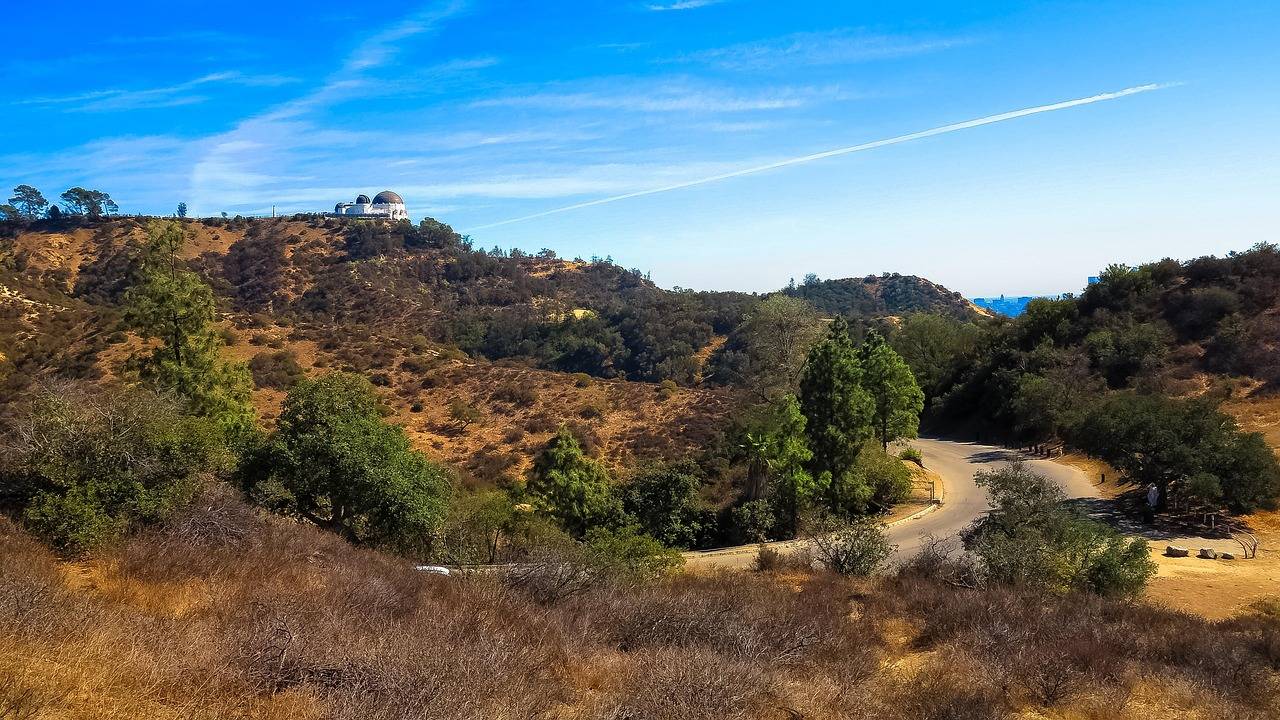
The setting inside Griffith Park
The venue’s own history page describes the historic Greek Theatre as one of the nation’s best-known outdoor entertainment venues, located within Griffith Park, and notes that the land is owned by the City of Los Angeles. That public ownership is central to the story: the theatre sits on parkland given to residents, not on a private lot.
The park itself is large. According to the venue’s Griffith Park page, Griffith Park is the largest municipal park with an urban wilderness area in the United States, covering more than 4,210 acres of chaparral-covered terrain and landscaped parkland. A show at the Greek therefore starts with a drive or ride into hills and trees rather than a walk down a city street, which is part of its character among Los Angeles venues.
Outdoor staging also means the experience depends on conditions. An open-air amphitheater is exposed to the weather in a way that an indoor hall is not, so dressing for the evening and arriving with time to settle in are sensible habits. Readers planning other open-air nights can find more ideas in general outdoor concert advice elsewhere, but the venue’s own rules always take priority over any generic checklist.
From a bequest to a theatre: a short history
The theatre traces back to Colonel Griffith J. Griffith, a businessman who owned the Los Feliz ranch land. The venue history page says he donated the land to the City of Los Angeles in 1896, and that in 1919 his will set up a trust fund of $1,000,000 for a world-class observatory and a Greek Theatre. The Griffith Park page adds that the trust designated funds for a Greek amphitheater, built in 1930, alongside the observatory.
Before construction, according to the same history page, the city’s Park Commissioners surveyed Greek theatres around the world and approved a design that adapted the classic model with modern features. The cornerstone was laid in 1928 and the building was officially dedicated on Sept. 25, 1930. The first show followed on June 26, 1931, and the page says seats in the first sections sold for $1 while the remainder were free.
The venue page also records that during most of the 1940s the theatre served as a barracks during World War II, before promoters and entertainment companies began working with the city on improvements. The page notes that the first seasons provided operatic music, and that promoters and entertainment companies have since partnered with the city to bring improvements to the theatre’s house and backstage areas. Over the decades the programme moved toward the popular music that fills the calendar today.
What the theatre is like today
A renovation in 2006 restored the original facade and brought the seating to its present capacity of 5,900, according to the venue’s history page. That makes it a mid-sized amphitheater: larger than a club or a ballroom, smaller than a stadium, which is why it suits artists who want a more intimate outdoor setting than the biggest arenas offer.
Comparing venues is a good way to understand the city’s scene. The Hollywood Bowl visitor guide covers another large outdoor amphitheater, while the troubadour west hollywood is a small indoor club with a very different feel, and the contrast shows how varied live music in the city can be.
Getting there: parking, shuttle and transit
Driving is the default for many visitors, but the venue’s parking page sets out several alternatives. A designated rideshare drop-off and pick-up area is located in Lot C, on Vermont and Commonwealth, and the page says drivers should enter through Vermont Avenue. Motorcycle parking is only available in Lot F. If online parking sells out, additional parking can still be bought onsite at day-of-show rates.
The same page lists a shuttle option from the Pony Ride Train Lot in Griffith Park, on the northeast corner of Crystal Springs Drive and Los Feliz Boulevard, meant to reduce the number of vehicles driving up on show nights. For public transit, the LADOT DASH Observatory/Los Feliz bus runs to the venue. According to the parking page, buses leaving the park depart ten minutes after the show ends and travel to the Vermont/Sunset station on the Metro B Line, and the last train from that station departs at 11:55pm. Services can change, so the official page is the place to confirm details before a trip.
Parking terms are worth reading before buying. The venue’s parking information states that parking fees are charged per space and that sales are final, with no refunds or exchanges. For guests who need step-free access, it also lists an accessible drop-off area located in front of the Box Office.
House rules to know before going
The venue FAQ sets the practical rules, and says the list is subject to change at any time by management. At the time of writing, it covers these points:
- Cans, bottles and glass containers are not allowed, though guests may bring empty reusable plastic bottles.
- Coolers, large bags, and tripods, monopods or selfie sticks are on the prohibited list.
- Small, non-metal seat cushions are allowed.
- Strollers are permitted in the venue but not in any seating areas.
- Only service animals are permitted.
- Aisles must be kept clear of sitting and standing.
Accessibility and drinks are covered on the same page. The FAQ says the venue will provide wheelchair-accessible seating in designated spaces and locations. It also says alcohol is sold only to guests of legal age with identification, that sales can end at the discretion of management, and that vapes and e-cigarettes are allowed in designated areas only.
On photography, the FAQ prohibits flash photography and professional cameras, including cameras with detachable lenses, so a phone is the practical choice. The venue is also cash-free and takes only debit and credit cards. Anyone planning a visit should read the current version of these rules, because artists and events can add their own conditions.
Frequently asked questions
Who owns the Greek Theatre?
Show answer
The venue’s history page states that the theatre is owned by the City of Los Angeles.
Do children need a ticket?
Show answer
According to the venue FAQ, every attendee, regardless of age, must have a valid ticket to enter, and age restrictions may differ from show to show.
Can guests bring their own cameras?
Show answer
Only small point-and-shoot style cameras are allowed, and flash photography and professional cameras are prohibited, according to the venue FAQ.
Is there help for guests with hearing loss?
Show answer
The venue FAQ says headsets for assisted listening are available free of charge, with a deposit, at the Guest Services Booth. Anyone with hearing concerns should also speak with an audiologist or doctor.
Can guests pay with cash?
Show answer
No. The venue FAQ describes the Greek Theatre as a fully cash-free venue that accepts only debit and credit cards.