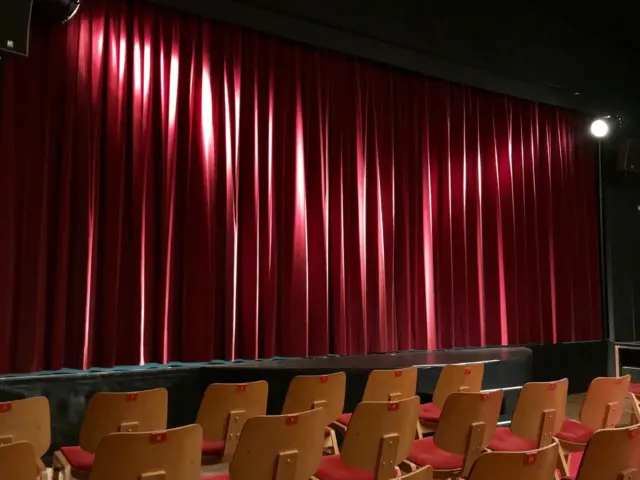

Known to music fans as the Troubadour West Hollywood club, this venue opened in 1957 as a small coffeehouse and grew into a launch pad for folk, rock and comedy acts.
This guide explains how the room came to matter and how a night there works. For the wider picture of the city’s rooms, see this overview of live music in los angeles.
From coffeehouse to nightclub
According to the club’s own history page, the Troubadour opened its doors as a 65-seat coffeehouse on La Cienega Boulevard. That is a very different picture from the busy club of today. Coffeehouses of that era were small, informal rooms where poets, folk singers and comedians could try out material in front of a small audience.
The move to its current street came in 1961. The same page says the venue moved from La Cienega to Santa Monica Boulevard and held an official grand opening there. From that point it worked as a proper live music nightclub rather than a coffee shop, with a stage, a bar and a steady calendar of bookings.
Programming also changed along the way. The history page describes a shift from underground jazz to traditional American folk singers and blues acts, which suited the folk revival that was spreading through American cities at the time.
The Hoot and the folk years
One feature explains much of the club’s early reputation: the Monday open-mic. The history page describes a Monday night Hootenanny open-mic audition system, which regulars shortened to the Hoot. Anyone could sign up to play a short set, and the room doubled as a casual audition stage.
That format attracted professionals as well as hopefuls. By the club’s account, major label executives began regularly sitting in the front rows scouting talent. For an unsigned songwriter, a few songs on a Monday night could be seen by the people who signed records, which is a large part of why singer-songwriters from across the country made the trip to West Hollywood.
The idea of an open-mic as a pipeline into the industry is still familiar.
- Tickets sold through AXS: Tickets sold through AXS
- Most shows are general admission standing room: Most shows are general admission standing room
- All Ages events, some with age restrictions: All Ages events, some with age restrictions
- No coat check: No coat check
- Professional cameras not generally permitted: Professional cameras not generally permitted
Careers and moments tied to the room
The venue’s own chronicle is long, and it calls itself an incomplete one. A few entries show the range. It records that the founding members of a famous folk-rock band met in the front bar area of the venue, and that a singer who later hired two future members of the Eagles met them at the Troubadour front bar.
It also covers comedy. The page lists the stand-up comic Lenny Bruce, who was arrested on obscenity charges right on the Troubadour stage, and notes that Richard Pryor returned to the venue to record his landmark, self-titled debut live album. A club that hosts both songwriters and comics tends to become a place where performers meet each other as well as audiences.
Live recording is a recurring theme. The same chronicle mentions the Tim Buckley release Live at the Troubadour 1969, a reminder that small clubs often produce the most revealing concert albums, because the microphones sit close to the stage and the audience is part of the sound.
Another entry marks a milestone for a British pianist and singer: a 23-year-old Elton John made his historic US live debut in 1970. Whatever one thinks of lists of famous names, the pattern is the useful part. Artists often use a small, well-known room as the place to introduce themselves to a new country or city.
How a show works today
Day to day, the practical details matter more than the history. The club says tickets are sold through its ticketing partner, and it warns that tickets from other sellers may fail at the door: unofficial tickets may not scan successfully. Its policy at the time of writing is that all ticket sales are final unless a show is cancelled.
Most nights are standing-room. At the time of writing, the club states that most shows are general admission and standing-room only, so position in the room depends on when a guest arrives rather than on a seat number. The venue also says doors typically open one hour before show time, and it asks fans not to queue early: do not line up more than one hour before doors.
Set times usually appear on the day. The venue says it generally posts day-of-show set times around 1 PM, and that most shows end at the latest around 11 PM to midnight. Knowing the usual rhythm helps with planning a ride home and with deciding whether to catch an opening act.
The box office is also worth knowing about. The club states that its box office is cash only, and the same page says same-day tickets are sold only when a show has not sold out.
Rules, ID and what to bring
Age policies vary by event. The club says it hosts All Ages events, although some events may have age restrictions, and it asks guests to check each event page. To buy or drink alcohol, guests must be 21 years of age or older and present a valid government-issued photo ID.
Bags are limited. At the time of writing, the policy is that bags and backpacks measuring 14″ × 14″ or smaller are permitted, and because the venue does not offer coat check or hold personal belongings, anything that is not allowed has to stay at home or in a vehicle.
Photos and video are treated carefully. Camera rules depend partly on the performer, but the venue states that professional cameras and cameras with detachable lenses are generally not permitted unless specifically approved, and that video recording is not permitted without an approved photo or media pass. The club is also a non-smoking, non-vaping venue. Rules can change, so the FAQ and the event page for a given night are the final word.
Getting there and parking
The club sits on Santa Monica Boulevard in West Hollywood, a stretch of the city where street parking is contested on show nights. The venue itself says that parking is limited and recommends rideshare or public transportation whenever possible.
It also clarifies who runs the lots nearby: the Troubadour does not operate parking lots or valet services, so rates and hours are set by each operator and should be confirmed before leaving a vehicle.
For a sense of how a small club differs from a big amphitheatre or hall, compare it with the larger rooms covered in guides to the Greek Theatre Los Angeles and The Wiltern Los Angeles.
Frequently asked questions
Is the Troubadour only for adults?
Show answer
Not always. The venue says it hosts All Ages events, although some events may have age restrictions, so the event page for each show is the place to check.
Are most shows seated?
Show answer
No. The club states that most shows are general admission, standing-room only, with seating noted on the event page when a show has it.
Can fans bring a professional camera?
Show answer
Generally no. The policy is that professional cameras are generally not permitted unless specifically approved, and the performer’s team decides on credentials.
Is there a place to leave a bag?
Show answer
No. The venue says it does not offer coat check or hold personal belongings, so travelling light is the practical answer.